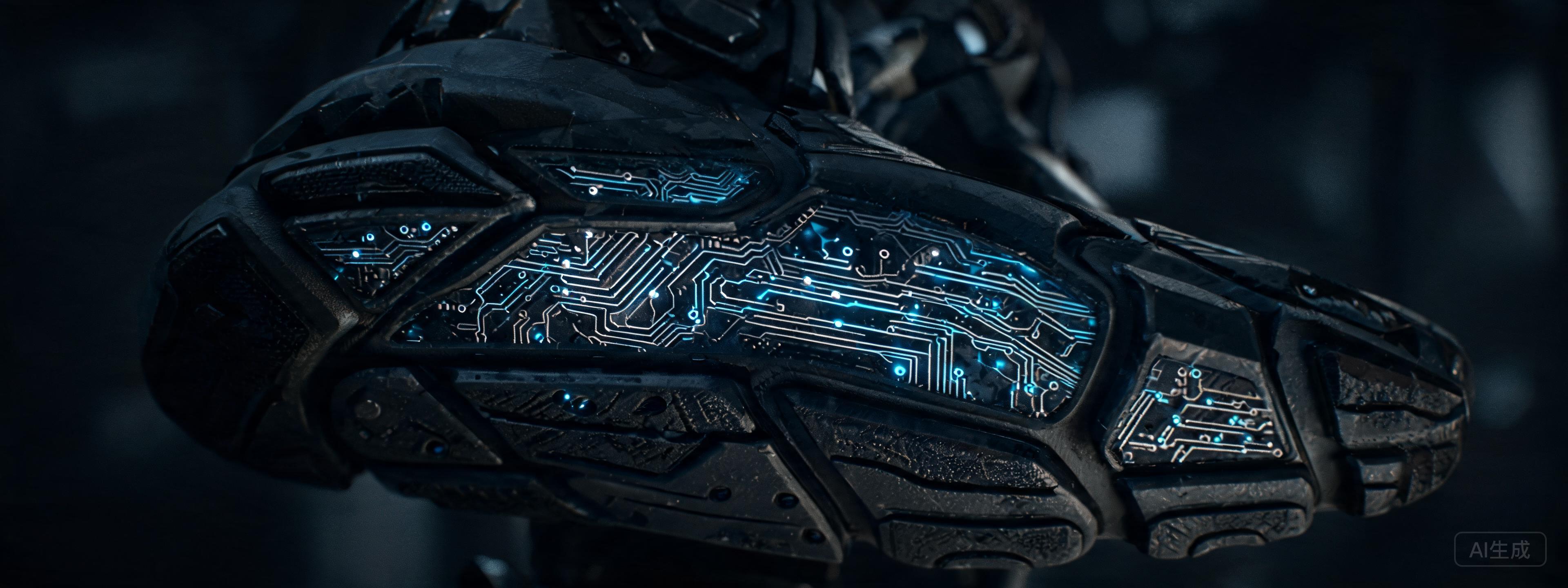
Challenges and Solutions
Six Core Difficulties and Corresponding Solutions of RobotSole
The soles of robots have long been treated as "a rubber mat", but they are actually the "last mile" that determines stability, lifespan and safety. Based on the research and patent accumulation of RobotSole's foot-end system-level accessories, we have sorted out the six most common difficulties in the industry and their corresponding solutions, which is convenient for rapid model selection and solution communication.

Difficult to Fix, Easy to Fall Off
Traditional adhesive or universal pads are prone to displacement and loosening under high-frequency vibration and impact loads, causing robot posture instability, walking deviation, or even falls. Once the sole falls off, it not only causes machine shutdown but may also damage expensive joint modules and sensors, resulting in high maintenance costs.
RobotSole adopts an innovative mechanical buckle + quick-release wear-resistant patch structure (multiple patents filed). The standardized interface enables glue-free fixing, with installation and replacement taking only 30 seconds. The risk of falling off is nearly eliminated, and the modular design significantly reduces maintenance costs, making sole replacement as simple as changing a tire.

Insufficient Buffering, High Noise
Single-layer rubber pads have limited buffering capacity. When the robot lands, the peak impact force can reach 2-3 times its own weight. Long-term impact not only causes excessive noise (affecting human-robot collaboration environments) but also leads to fatigue damage to core components such as joint modules and reducers, significantly shortening the robot's service life.
RobotSole has developed a three-layer gradient buffering system + high-performance damping materials (bionic shock absorption patents #22/#32). Through a soft-hard layered energy absorption design, impact forces are dispersed level by level, reducing peak force and noise by over 40% simultaneously. It meets industrial-grade silent scenario requirements while effectively protecting joint modules and extending overall service life.

Flat Foot Structure, Poor Terrain Adaptability
Traditional flat-foot soles cannot adapt to unstructured terrains such as stairs, slopes, gravel, and grass. They have weak obstacle-surmounting ability and are prone to slipping or getting stuck on complex surfaces. This severely limits the robot's application range in outdoor, construction site, warehouse, and other real-world scenarios, confining it to flat laboratory environments.
RobotSole adopts a zone-based functional design + variable stiffness multi-terrain adaptive mechanism (Patent #26 archless zone-divided design, #81 variable stiffness sole). Different zones of the sole can automatically adjust hardness and deformation according to the terrain, achieving terrain adaptation similar to the human foot arch. Complex terrain passability is significantly improved, allowing robots to truly step out of the laboratory.

Insufficient Anti-Slip and Wear Resistance
Ordinary rubber soles are extremely slippery on wet, oily, or sloped surfaces, posing serious safety hazards. Meanwhile, mainstream wear-resistant service life is only 2,000-3,000 hours, far below the 10,000+ hour requirement for industrial scenarios. Frequent replacements affect production efficiency.
RobotSole uses CR/TPU composite outsole materials + multi-terrain pattern design (Patent #63 multi-terrain anti-slip) + specialized wear-resistant formula. It maintains excellent grip even in harsh conditions such as wet and oily surfaces, with wear-resistant service life increased to over 8,000 hours. Both grip and durability are dual-improved, meeting strict industrial standards.

Many Models, Lacking Standardization and Modularization
Each robot manufacturer customizes its own soles, resulting in a wide variety of models and inconsistent interfaces. Spare parts management is difficult, batch maintenance costs are high, and interchangeability is poor, severely constraining the scaled development of the robot industry and after-sales service efficiency.
RobotSole launches a standardized plug-and-play sole module system (multiple patent layouts). Unified mechanical and electrical interfaces support on-demand selection and rapid expansion. The shift from "custom negotiation for each order" to "standard selection, plug and play" greatly reduces supply chain complexity and promotes industry standardization.

The Contradiction Between Lightweight and High Strength
Every 100g reduction in sole weight can decrease joint torque by approximately 10%, significantly improving endurance and dynamic performance. However, thin-walled structures are prone to fatigue fracture. Traditional materials struggle to balance lightweight and high strength, becoming a key bottleneck limiting robot performance improvement.
RobotSole adopts carbon fiber one-piece molding + topology optimization design. Key load-bearing areas are structurally reinforced while non-load-bearing areas are thinned to the extreme, achieving "strength where needed, lightness where possible." Weight is reduced by 40-60% without sacrificing strength, completely solving the industry dilemma of "light means soft, hard means heavy."
RobotSole has integrated the "material-structure-perception-standard" into a single-foot end system, using modular and mass-production-ready mature solutions to turn the aforementioned six types of difficulties from "laboratory challenges" into "off-the-shelf products". For specific parameters or customization, please feel free to contact the RobotSole engineering team.
Our Solutions
Flexible collaboration models tailored to your project stage and requirements
Whether you have a concept, a complete design, or need collaborative development, RobotSole offers the right solution for your robotics sole needs.

Custom R&D Solution
From Concept to Sample
You provide the requirements — we handle the rest.
Your Requirements
Physical properties, chemical properties, materials, shapes, dimensions, and performance specifications
Our Process
Material research, formulation development, prototype design, testing and validation
Deliverables
Technical reports, sample products, and documentation for your evaluation
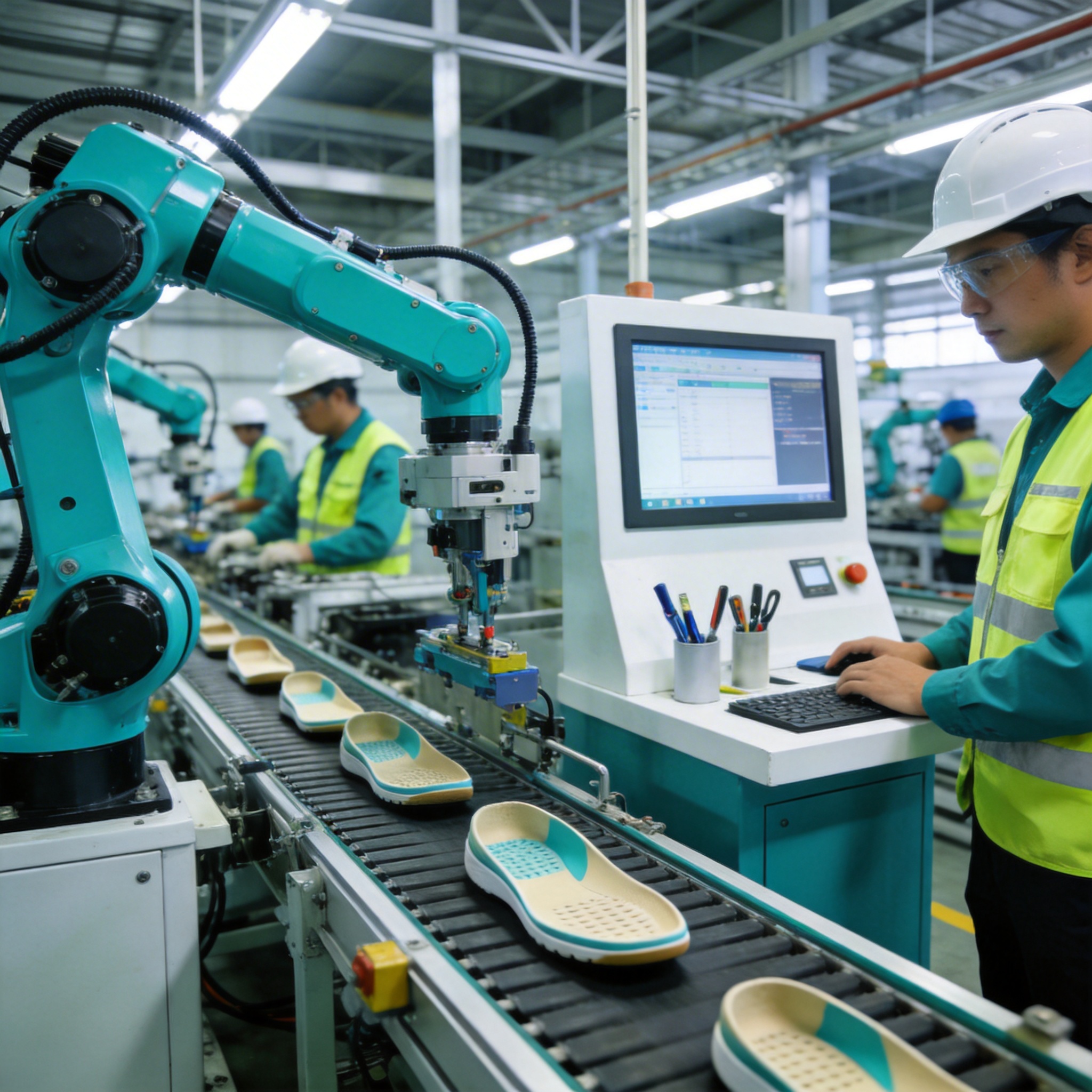
OEM Production Solution
From Design to Mass Production
Your design, our manufacturing excellence.
Your Input
Complete product design, technical specifications, and quality standards
Our Process
Sample prototyping, mold development, pilot production, and mass manufacturing
Deliverables
Quality-controlled products delivered on schedule with full traceability

Collaborative Development
End-to-End Partnership
Seamless integration with your design partners and production facilities.
Partnership Model
Third-party design firms or robot manufacturers coordinate with RobotSole
Our Process
Joint development, integrated testing, coordinated production, and synchronized delivery
Deliverables
Fully integrated solutions with seamless supply chain coordination
Ready to Start Your Project?
Contact our team to discuss which solution best fits your needs.